Reflections from Medellín: My Participation in the 10th International Family Law Congress at the University of Antioquia
Reflections from Medellín: My Participation in the 10th International Family Law Congress at the University of Antioquia
The 10th International Family Law Congress of the University of Antioquia, held on 27 and 28 November 2025 at the Medellín Chamber of Commerce, brought together leading academics, magistrates, researchers, and practitioners to examine contemporary challenges facing the family, its legal protection, and the evolving rights of children and adolescents. The carefully designed programme addressed topics ranging from recent Colombian jurisprudence to legal certainty in family matters, administrative protection procedures, and evidentiary challenges in modern family law.
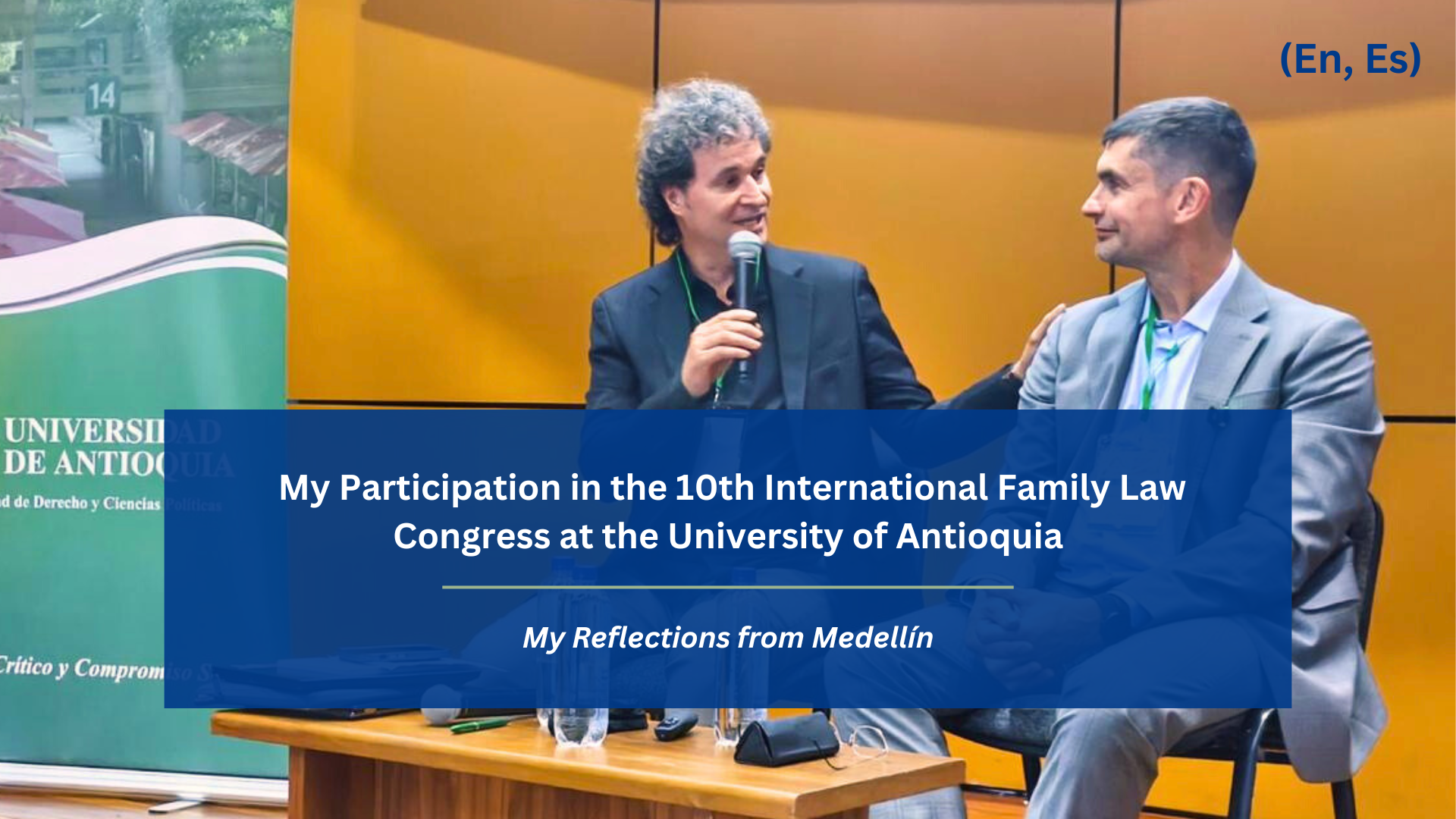
I had the privilege of participating as an invited speaker and of moderating the specialised colloquium on mediation and conflict management. Punctuality and intellectual discipline combined seamlessly with the human warmth that characterises Medellín and the academic community of the U de A: a professional and demanding environment that was, at the same time, extraordinarily friendly and welcoming.
My Lecture: “The Construction of the Family and the Protection of Children’s Rights Between Theory, Judicial Decisions and Social Representations”
In my presentation on 27 November, I shared the results of my research on changing family structures, the functioning of family protection systems, and the discrepancies between their formal objectives and the actual outcomes of state interventions. I presented theoretical frameworks, empirical data, and legal–institutional comparisons between Germany, Belgium, and other European systems.
Some of the key points included:
- The structural transformation of the family: the plurality of models, new affective bonds, non-traditional structures, and the challenges these pose for legal frameworks and administrative protection.
- The gap between the mandate and the results of Family Protection Systems (FPS): lack of evaluation, significant social impact, and insufficient responses to highly emotional conflicts. A legal system still based on outdated family models, which must be re-centred on the best interests of the child.
- The role of the child’s attorney and the visitation guardian (Germany/Belgium): their strengths and weaknesses, professional requirements, legal influence, and practical effects.
- Collaborative expertise (peritaje colaborativo): a consensus-based alternative that seeks to reduce harm and shift expert intervention towards a more sustainable and less confrontational model.
Moderating the Mediation Colloquium: Dialogue, Rigor, and Humanity
My second responsibility at the Congress was moderating the specialised colloquium on mediation and the management of family conflicts. This session brought together highly skilled Colombian professionals to discuss how cooperative, interdisciplinary, and restorative approaches can be integrated into the handling of parental conflicts.
Summary
What impressed me most about the congress was the unusually powerful combination of three elements:
- An exceptionally high legal standard, with deeply reasoned, comparative, and critical contributions.
- Open, respectful, and honest debate, even on complex questions such as the role of the judge, the scope of expert intervention, or the need to move beyond traditional adversarial models.
- A warm, close, and profoundly human atmosphere, where every contribution—academic or practical—was guided by a genuine commitment to the protection of children and adolescents.
As moderator, I had the opportunity to weave together diverse perspectives, connect international debates with the Colombian context, and emphasise the importance of consensus-driven methods to reduce harm in family proceedings.
Medellín: Science, Warmth, and Commitment
The Congress of the University of Antioquia was, without a doubt, one of the warmest, most demanding, and most stimulating academic gatherings I have participated in. Medellín offers not only a vibrant setting but also a legal community that combines doctrinal excellence, ethical depth, and human warmth.
I return with a renewed conviction that:
- Mediation and cooperative approaches are indispensable to transforming family justice.
- Law must remain in constant dialogue with psychology, sociology, and the emotional reality of conflict.
- Protection systems must be evaluated, revised, and reformed with honesty and evidence.
- And above all, that academia and practice can meet in spaces where professional rigor coexists with humanity and warmth.
___________________________________________________________
Reflexiones desde Medellín: Mi participación en el X Congreso Internacional de Derecho de Familia de la Universidad de Antioquia
El Décimo Congreso Internacional de Derecho de Familia de la Universidad de Antioquia, celebrado los días 27 y 28 de noviembre de 2025 en la Cámara de Comercio de Medellín, reunió a académicos, magistrados, investigadores y profesionales de alto nivel para analizar los desafíos contemporáneos de la familia, su protección jurídica y la evolución de los derechos de los niños y adolescentes. El programa, cuidadosamente estructurado, abordó temas que van desde la nueva jurisprudencia colombiana hasta la seguridad jurídica familiar, los procesos administrativos de protección y los retos probatorios en el derecho de familia contemporáneo.
Tuve el privilegio de participar como ponente invitado y de moderar el coloquio especializado sobre mediación y tratamiento de conflictos. La puntualidad y disciplina intelectual combinaban, sin embargo, con la calidez humana que caracteriza a Medellín y a la comunidad académica de la U de A: un ambiente profesional, exigente y, al mismo tiempo, extraordinariamente cercano y cordial.
Mi conferencia: “La construcción de la familia y la protección de los derechos de los niños entre teoría, decisiones judiciales y representaciones”
En mi intervención del 27 de noviembre expuse los resultados de mis investigaciones sobre familias cambiantes, el funcionamiento de los sistemas de protección familiar y las discrepancias entre los objetivos y los resultados reales de las intervenciones estatales. Presenté los marcos teóricos, los datos empíricos y las comparaciones jurídico-institucionales entre Alemania, Bélgica y otros sistemas europeos.
Algunos de los puntos centrales:
- El cambio estructural de la familia: pluralidad de modelos, nuevos vínculos afectivos, estructuras no tradicionales y desafíos para el derecho y la protección administrativa.
- La brecha entre el mandato y los resultados de los Sistemas de Protección a la Familia (SPF): falta de evaluación, impacto social elevado y respuestas insuficientes frente a conflictos altamente emocionales. Un derecho basado en modelos familiares superados, que ha de estar centrado en el bien superior del menor
- El rol del abogado del menor y del tutor de visitas (Alemania/Bélgica): luces y sombras, requisitos profesionales, influencia jurídica y efectos prácticos.
- El peritaje colaborativo: una alternativa basada en el consenso, que busca reducir el daño y transformar la intervención pericial hacia un modelo más sostenible y menos confrontativo.
Moderación del Coloquio sobre Mediación: diálogo, rigor y humanidad
Mi segunda responsabilidad en el Congreso fue la moderación del coloquio especializado sobre mediación y tratamiento de los conflictos familiares, un espacio que reunió a profesionales colombianas altamente competentes y especializadas para discutir cómo integrar enfoques cooperativos, interdisciplinarios y restaurativos en la práctica de los conflictos parentales.
Resumen
Lo que más me impresionó del Congreso fue la combinación poco frecuente de tres elementos:
- Un nivel jurídico excepcionalmente alto, con intervenciones profundamente fundamentadas, comparativas y críticas.
- Un debate abierto, respetuoso y honesto, incluso en temas complejos como el rol del juez, el margen de actuación del perito o la necesidad de superar modelos litigiosos tradicionales.
- Una atmósfera cálida, cercana y profundamente humana, donde cada intervención —académica o práctica— partía del compromiso real con la protección de niños, niñas y adolescentes.
Como moderador, tuve la oportunidad de articular perspectivas, conectar debates internacionales con la realidad colombiana y subrayar la importancia de métodos consensuales para reducir el daño en procesos de familia.
Medellín: ciencia, afecto y compromiso
El Congreso de la Universidad de Antioquia ha sido, sin duda, uno de los encuentros académicos más cálidos, exigentes y estimulantes en los que he participado. Medellín no solo ofrece un entorno vibrante, sino también una comunidad jurídica que combina excelencia doctrinal, profundidad ética y afectuosidad humana.
Regreso con la convicción renovada de que:
- La mediación y los enfoques cooperativos son indispensables para transformar la justicia de familia.
- El derecho debe dialogar constantemente con la psicología, la sociología y la realidad emocional de los conflictos.
- Los sistemas de protección deben evaluarse, revisarse y reformarse con honestidad y evidencia.
- Y, sobre todo, que la academia y la práctica pueden encontrarse en espacios donde el rigor profesional convive con la calidez y la humanidad
The 10th International Family Law Congress of the University of Antioquia, held on 27 and 28 November 2025 at the Medellín Chamber of Commerce, brought together leading academics, magistrates, researchers, and practitioners to examine contemporary challenges facing the family, its legal protection, and the evolving rights of children and adolescents. The carefully designed programme addressed topics ranging from recent Colombian jurisprudence to legal certainty in family matters, administrative protection procedures, and evidentiary challenges in modern family law.
I had the privilege of participating as an invited speaker and of moderating the specialised colloquium on mediation and conflict management. Punctuality and intellectual discipline combined seamlessly with the human warmth that characterises Medellín and the academic community of the U de A: a professional and demanding environment that was, at the same time, extraordinarily friendly and welcoming.
My Lecture: “The Construction of the Family and the Protection of Children’s Rights Between Theory, Judicial Decisions and Social Representations”
In my presentation on 27 November, I shared the results of my research on changing family structures, the functioning of family protection systems, and the discrepancies between their formal objectives and the actual outcomes of state interventions. I presented theoretical frameworks, empirical data, and legal–institutional comparisons between Germany, Belgium, and other European systems.
Some of the key points included:
- The structural transformation of the family: the plurality of models, new affective bonds, non-traditional structures, and the challenges these pose for legal frameworks and administrative protection.
- The gap between the mandate and the results of Family Protection Systems (FPS): lack of evaluation, significant social impact, and insufficient responses to highly emotional conflicts. A legal system still based on outdated family models, which must be re-centred on the best interests of the child.
- The role of the child’s attorney and the visitation guardian (Germany/Belgium): their strengths and weaknesses, professional requirements, legal influence, and practical effects.
- Collaborative expertise (peritaje colaborativo): a consensus-based alternative that seeks to reduce harm and shift expert intervention towards a more sustainable and less confrontational model.
Moderating the Mediation Colloquium: Dialogue, Rigor, and Humanity
My second responsibility at the Congress was moderating the specialised colloquium on mediation and the management of family conflicts. This session brought together highly skilled Colombian professionals to discuss how cooperative, interdisciplinary, and restorative approaches can be integrated into the handling of parental conflicts.
Summary
What impressed me most about the congress was the unusually powerful combination of three elements:
- An exceptionally high legal standard, with deeply reasoned, comparative, and critical contributions.
- Open, respectful, and honest debate, even on complex questions such as the role of the judge, the scope of expert intervention, or the need to move beyond traditional adversarial models.
- A warm, close, and profoundly human atmosphere, where every contribution—academic or practical—was guided by a genuine commitment to the protection of children and adolescents.
As moderator, I had the opportunity to weave together diverse perspectives, connect international debates with the Colombian context, and emphasise the importance of consensus-driven methods to reduce harm in family proceedings.
Medellín: Science, Warmth, and Commitment
The Congress of the University of Antioquia was, without a doubt, one of the warmest, most demanding, and most stimulating academic gatherings I have participated in. Medellín offers not only a vibrant setting but also a legal community that combines doctrinal excellence, ethical depth, and human warmth.
I return with a renewed conviction that:
- Mediation and cooperative approaches are indispensable to transforming family justice.
- Law must remain in constant dialogue with psychology, sociology, and the emotional reality of conflict.
- Protection systems must be evaluated, revised, and reformed with honesty and evidence.
- And above all, that academia and practice can meet in spaces where professional rigor coexists with humanity and warmth.
_________________________________________________________
Reflexiones desde Medellín: Mi participación en el X Congreso Internacional de Derecho de Familia de la Universidad de Antioquia
El Décimo Congreso Internacional de Derecho de Familia de la Universidad de Antioquia, celebrado los días 27 y 28 de noviembre de 2025 en la Cámara de Comercio de Medellín, reunió a académicos, magistrados, investigadores y profesionales de alto nivel para analizar los desafíos contemporáneos de la familia, su protección jurídica y la evolución de los derechos de los niños y adolescentes. El programa, cuidadosamente estructurado, abordó temas que van desde la nueva jurisprudencia colombiana hasta la seguridad jurídica familiar, los procesos administrativos de protección y los retos probatorios en el derecho de familia contemporáneo.
Tuve el privilegio de participar como ponente invitado y de moderar el coloquio especializado sobre mediación y tratamiento de conflictos. La puntualidad y disciplina intelectual combinaban, sin embargo, con la calidez humana que caracteriza a Medellín y a la comunidad académica de la U de A: un ambiente profesional, exigente y, al mismo tiempo, extraordinariamente cercano y cordial.
Mi conferencia: “La construcción de la familia y la protección de los derechos de los niños entre teoría, decisiones judiciales y representaciones”
En mi intervención del 27 de noviembre expuse los resultados de mis investigaciones sobre familias cambiantes, el funcionamiento de los sistemas de protección familiar y las discrepancias entre los objetivos y los resultados reales de las intervenciones estatales. Presenté los marcos teóricos, los datos empíricos y las comparaciones jurídico-institucionales entre Alemania, Bélgica y otros sistemas europeos.
Algunos de los puntos centrales:
- El cambio estructural de la familia: pluralidad de modelos, nuevos vínculos afectivos, estructuras no tradicionales y desafíos para el derecho y la protección administrativa.
- La brecha entre el mandato y los resultados de los Sistemas de Protección a la Familia (SPF): falta de evaluación, impacto social elevado y respuestas insuficientes frente a conflictos altamente emocionales. Un derecho basado en modelos familiares superados, que ha de estar centrado en el bien superior del menor
- El rol del abogado del menor y del tutor de visitas (Alemania/Bélgica): luces y sombras, requisitos profesionales, influencia jurídica y efectos prácticos.
- El peritaje colaborativo: una alternativa basada en el consenso, que busca reducir el daño y transformar la intervención pericial hacia un modelo más sostenible y menos confrontativo.
Moderación del Coloquio sobre Mediación: diálogo, rigor y humanidad
Mi segunda responsabilidad en el Congreso fue la moderación del coloquio especializado sobre mediación y tratamiento de los conflictos familiares, un espacio que reunió a profesionales colombianas altamente competentes y especializadas para discutir cómo integrar enfoques cooperativos, interdisciplinarios y restaurativos en la práctica de los conflictos parentales.
Resumen
Lo que más me impresionó del Congreso fue la combinación poco frecuente de tres elementos:
- Un nivel jurídico excepcionalmente alto, con intervenciones profundamente fundamentadas, comparativas y críticas.
- Un debate abierto, respetuoso y honesto, incluso en temas complejos como el rol del juez, el margen de actuación del perito o la necesidad de superar modelos litigiosos tradicionales.
- Una atmósfera cálida, cercana y profundamente humana, donde cada intervención —académica o práctica— partía del compromiso real con la protección de niños, niñas y adolescentes.
Como moderador, tuve la oportunidad de articular perspectivas, conectar debates internacionales con la realidad colombiana y subrayar la importancia de métodos consensuales para reducir el daño en procesos de familia.
Medellín: ciencia, afecto y compromiso
El Congreso de la Universidad de Antioquia ha sido, sin duda, uno de los encuentros académicos más cálidos, exigentes y estimulantes en los que he participado. Medellín no solo ofrece un entorno vibrante, sino también una comunidad jurídica que combina excelencia doctrinal, profundidad ética y afectuosidad humana.
Regreso con la convicción renovada de que:
- La mediación y los enfoques cooperativos son indispensables para transformar la justicia de familia.
- El derecho debe dialogar constantemente con la psicología, la sociología y la realidad emocional de los conflictos.
- Los sistemas de protección deben evaluarse, revisarse y reformarse con honestidad y evidencia.
- Y, sobre todo, que la academia y la práctica pueden encontrarse en espacios donde el rigor profesional convive con la calidez y la humanidad